
Antique settees occupy a graceful middle ground between chairs and full-size sofas. Designed for two or three people, they were often placed in parlors, hallways and bedrooms where they provided both comfort and visual refinement. Today, settees remain invaluable for shaping intimate conversation areas, anchoring entryways or adding a tailored presence to smaller rooms.
Because of their moderate scale, settees adapt well to modern floor plans. They can fit where a sofa would overwhelm the room yet offer more invitation than a pair of individual chairs. In living rooms, pairing an antique settee with armchairs from our living room collection creates balanced seating arrangements that feel collected rather than over-planned.
The construction of antique settees showcases the best of period craftsmanship—carved frames, hand-tied springs and upholstery that follows the frame’s curves. Many pieces were designed as part of larger suites, lending them a cohesive, architecturally aware presence. Even when used alone, a settee can define an entire wall or niche through its silhouette and detailing.
Types of Antique Settees
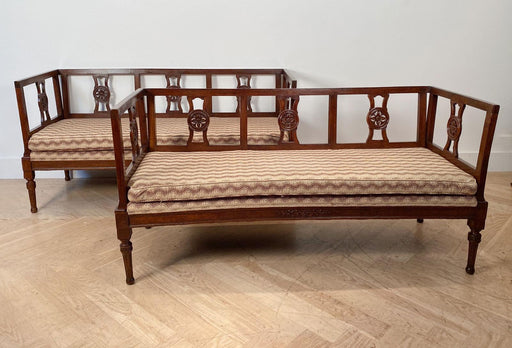
Settees appear in many forms, from elegantly scrolled French designs to more rectilinear English or American interpretations. Louis XV and Louis XVI settees feature carved wooden frames, cabriole or tapered legs and upholstered backs, perfect for refined salons or bedrooms. Victorian and Edwardian settees tend toward deeper seats and more generous padding, ideal for lounging.
Some settees incorporate high backs and arms, creating a sense of enclosure that works well in hallways or near fireplaces. Others resemble elongated side chairs, with open arms and lighter profiles suited to dining rooms or dressing spaces. Upholstered settees provide softness and color, while caned or partially open designs feel airy and architectural.
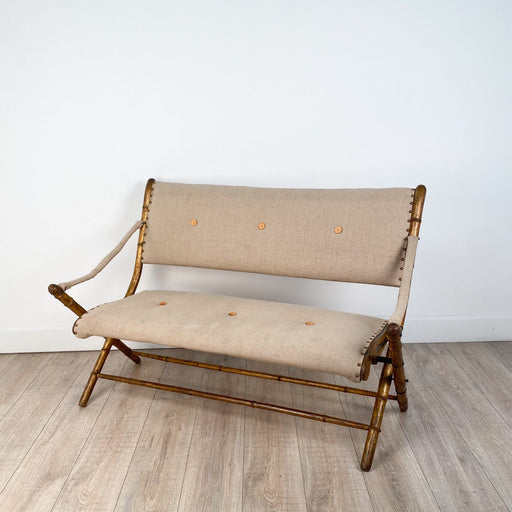
These variations make it possible to find a settee that fits almost any decor style. A carved, gilded piece might anchor a traditional apartment, while a simple wood-framed settee with neutral linen upholstery can sit comfortably in a contemporary or modern setting.
Decorating With Antique Settees
When decorating with settees, think about sightlines and circulation. Placed against a wall, a settee can frame artwork or a mirror from our mirrors collection, turning a blank space into a focal point. Floating a settee in the middle of a room helps divide areas without blocking light or views, especially in open-plan layouts.
In bedrooms, a settee at the foot of the bed provides a refined spot for reading, dressing or placing textiles. In foyers and corridors, it offers both function and welcome, giving guests a place to pause. Settees also work well under windows, where their low backs preserve natural light.
Textiles play a major role in how a settee feels. Patterned fabrics underscore history, while solid neutrals allow the frame to stand out. Adding pillows and throws introduces color and softness, tying the settee into rugs, artwork and accessories. For a layered look, consider pairing your piece with side tables from our tables collection or decorative accents from art.
As a key subcategory within our broader Seating collection, Antique Settees sit alongside sofas, benches and chairs from different periods. Exploring the full Seating range provides context for how these compact sofas relate to other historic forms and helps you discover additional pieces that complete a cohesive, well-proportioned interior.